While CIPS celebrates procurement leaving finance, South Africa and Nigeria are doing the opposite
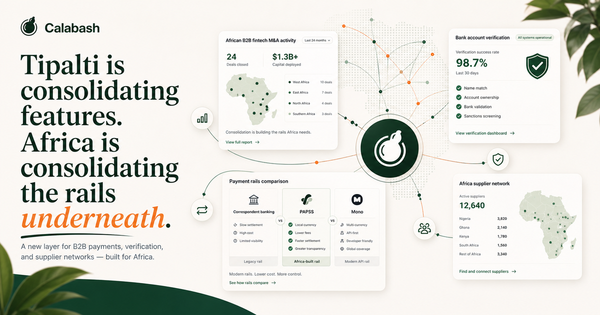
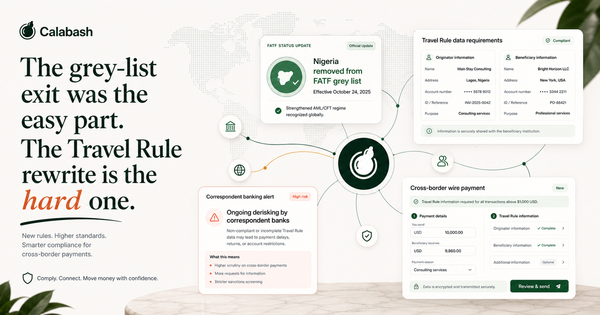
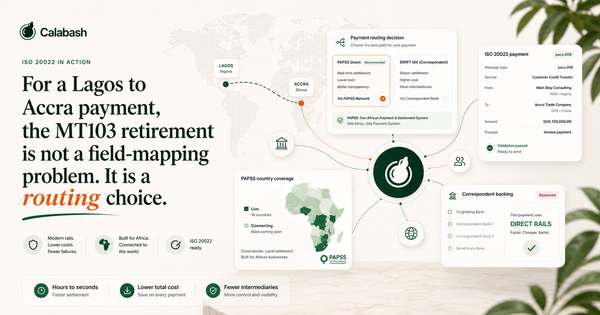
Global surveys celebrate procurement's escape from finance. South Africa and Nigeria spent 2024 doing the opposite, putting procurement back under Treasury oversight after state capture proved the informal corridor between the two functions was the only real defence against fraud.
One third. That is the share of procurement and supply chain professionals in the CIPS 2026 Global State of Procurement and Supply who now report directly to the chief executive. Three quarters no longer report to finance. Two years ago the majority did. CIPS frames this as procurement finally winning a seat at the top table, and on the global numbers it reads as progress.
I read the report with the Zondo Commission's final volume open on the other tab, and the framing did not survive contact with the African evidence.
In the same window CIPS was measuring procurement leaders winning independence from the CFO, South Africa's Parliament was finalising the Public Procurement Act 2024. The Act, signed into law on 23 July 2024 as Act 28 of 2024, does the structural opposite of what the CIPS data celebrates. It creates a new Public Procurement Office, and it parks that office inside National Treasury. Not adjacent to Treasury. Inside it. The architectural choice was deliberate, made by drafters who had read every page of the Zondo Commission report and who had heard the Chief Justice describe public procurement as the centrepiece of state capture.
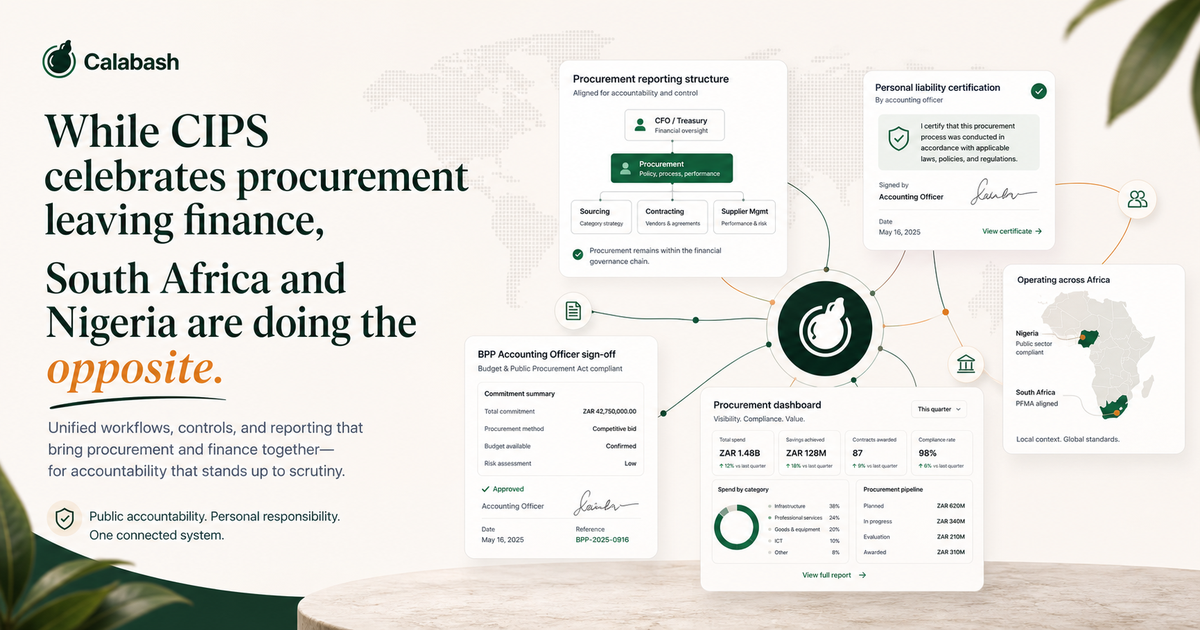
Nigeria's reform direction in the same period is structurally similar even though the institutional vocabulary differs. Under Nigeria's Public Procurement Act, the Accounting Officer, normally a Permanent Secretary or Director-General, is personally accountable for procurement actions in their ministry, department or agency. They certify that funds are available before the contract is placed, they commit the funds, and they wear the criminal liability if the procurement goes wrong. The Accounting Officer is, by statutory design, a finance role. The Bureau of Public Procurement's new Digital Submission Portal and its P-COMS monitoring platform sit on top of that statute, and they are explicitly built so the BPP can see what the Accounting Officer is signing off in something close to real time. The reform direction routes procurement decisions back through finance, not away from it.
So we have a global trend at one end and two of the continent's biggest economies running hard in the opposite direction at the other. The interesting question is not which side is right. The interesting question is what each side is solving for.
A different problem
The CIPS framing makes sense for an organisation that already has functional internal controls, an audit function with teeth, supplier master data that someone owns, and a treasurer who is not personally chasing bank confirmation letters across three time zones. Elevate procurement to the CEO's table in that setting and you free a strategic function to do strategic work. The compliance plumbing carries on because the plumbing actually exists.
African shops, in my experience taking calls with treasurers in Johannesburg, Lagos and Nairobi over the last six months, have a different problem. The plumbing is the control. The informal corridor between the procurement officer and the AP clerk, the WhatsApp message to the head of finance before a bank account change is processed, the second pair of eyes that happens because the procurement and treasury teams sit on the same floor and report to the same Group FD, that is the substantive defence against payment fraud in a great many mid-market African corporates. Take that corridor away in a market where 79% of organisations report payments fraud attempts in a year, where Nigerian financial institutions lost N52.26 billion to fraud in 2024 against N17.67 billion the year before, and you do not get a strategic CPO. You get a control vacuum, and that vacuum gets filled by whoever is fastest with a forged invoice and a near-identical vendor bank account.
Paul Vos at CIPS Southern Africa put it more politely than I just did. "Innovation has outpaced procurement discipline in many cases. Digital transaction volumes are increasing rapidly, but governance and controls are not keeping pace." The reform direction in South Africa and Nigeria is a reading of that gap by people who were paid to look at the failure cases. They concluded that procurement without finance's line of sight is, in the current African control environment, a structural risk.
What I had wrong
For a while I treated the African reform direction as a story about the public sector. That was lazy. The Public Procurement Act 2024 covers national, provincial and local organs of state and the public entities listed in the PFMA, which is most of the economically significant public sector procurement spend in South Africa. But the private sector reads these reforms too. The treasurers I have spoken with at listed corporates in Johannesburg are watching the PPO inside National Treasury and reading it as a signal of where institutional gravity now sits. The audit committees at large Nigerian corporates are watching the Accounting Officer liability provisions in the public sector and quietly tightening their own internal delegation matrices in the same direction. The reform energy is public-sector by statute, but the cultural read is wider.
I had been describing Calabash, in conversations with African treasurers, as the system that lets procurement and finance stay coordinated when the org chart pulls them apart. That is the wrong pitch for this market. The org chart here is not pulling them apart. The org chart here is, if anything, pulling procurement back under finance for substantive reasons that I had not properly accounted for. The right framing is closer to this: when the statute is making finance personally liable for procurement outcomes, the systems have to give finance line of sight without making procurement file a ticket for every supplier change.
What the systems have to do
In a control environment where the Accounting Officer is personally liable, or where the Public Procurement Office sits inside Treasury and is going to ask hard questions about whether you have any idea who you actually paid last quarter, the supplier record cannot be a procurement-owned object that finance gets a notification about. It has to be a shared object with two distinct edit surfaces and an audit trail that survives a Zondo-style inquiry. Procurement owns the strategic side of the record, meaning the category designation, the contract terms, the supplier performance scoring against the contract, the spend analytics that feed next year's category strategy. Treasury owns the financial side. That means the verified bank account on file, the sanctions and KYC status, the payment route, and the evidence trail behind every change to any of those fields. AP runs payments against the verified record, and if there is no verified record, AP does not run the payment. The workflow rules between procurement and treasury are explicit because the law now expects them to be.
That is roughly what we have been building, and the African control environment is making the design choice more defensible than the global CIPS trend would suggest. The systems have to do the coordination the org chart used to do. In markets where the org chart has historically been the last defence against payment fraud, the systems have to do more than that. They have to be the audit trail the regulator is going to ask for.
If you are a treasurer or a head of finance at a South African or Nigerian organisation, public or private, the question worth asking before the next audit committee is which of your current supplier financial controls would survive an Act 28 inspection or a BPP query, and which of them are currently living in the WhatsApp messages on someone's phone. Sign up at calabash.app and we will go through your current supplier data model with you and tell you, candidly, which controls have a home in your systems and which are still being held by the people who happen to sit on the same floor.